Seven Reasons You Waste Money on Groceries and How to Stop
The average household throws away hundreds of dollars of food a month. Here are seven reasons it happens and a simple fix for each.

Most households waste money on groceries for seven fixable reasons: shopping without a plan, overbuying fresh food, forgetting what is already in the fridge, cooking the wrong portions, letting leftovers die, shopping for a fantasy week, and using a messy list. Food waste is rarely about being careless. It is about a few small habits that quietly add up to hundreds of dollars a month. Fix the habits and the waste mostly disappears. Here is each reason, with the fix.
1. You shop without a plan
Walking into a shop without knowing the week's meals means you buy by instinct, and instinct overbuys. You grab things that look good, duplicate items you already have, and still arrive home without the makings of an actual dinner.
The fix is to decide the meals first and shop second. When the list comes from a real plan, every item has a job. Nothing goes in the basket on a hunch, and nothing important gets missed.
2. You overbuy fresh produce
Fresh fruit and vegetables are where most of the money rots, literally. We buy with good intentions, picturing a week of salads, then watch half of it wilt. Produce has a clock on it, and an overstocked crisper drawer is a slow leak of cash.
The fix is to buy produce to the plan, in the quantities the meals actually call for, not in hopeful bulk. If three meals need spinach, buy enough for three meals. A plan turns vague good intentions into exact amounts.
3. You forget what is already in the fridge
A huge share of waste is simply buying what you already own. The jar at the back, the half bag of rice, the vegetables hiding behind the milk. Out of sight, bought again, and the original quietly expires.
The fix is to look before you list. A quick check of the fridge, freezer and cupboard before planning means you build the week partly from what you have, which both cuts the bill and clears the things most likely to spoil.
4. You cook the wrong portions
Cooking for a family is a guessing game, and the guess usually runs high. Too much gets made, the surplus is meant to become tomorrow's lunch, and instead it sits until it is no longer appealing.
The fix is to scale recipes to the number of people actually eating, and to plan deliberately for leftovers rather than producing them by accident. Planned leftovers get eaten. Accidental ones get binned.
5. You let leftovers die
Leftovers are free meals that most households throw away. The food is fine. The problem is that nobody decided when it would be eaten, so it loses to whatever is fresher and easier on the night.
The fix is to give leftovers a slot. Put a planned leftovers night in the week, or assign yesterday's surplus to today's lunch on purpose. A leftover with a place in the plan is a meal. A leftover with no plan is rubbish in waiting.
6. You shop for a fantasy week
We often shop for the cook we wish we were, not the one we will be on a tired Wednesday. The ambitious recipe with ten special ingredients gets bought, then never made, and those ingredients are the most likely of all to be wasted because nothing else uses them.
The fix is to plan for your real week, with the time and energy you will actually have. Keep the ambitious dish for a day you genuinely have space for it, and build the rest of the week from meals you will really cook.
7. Your list is a mess
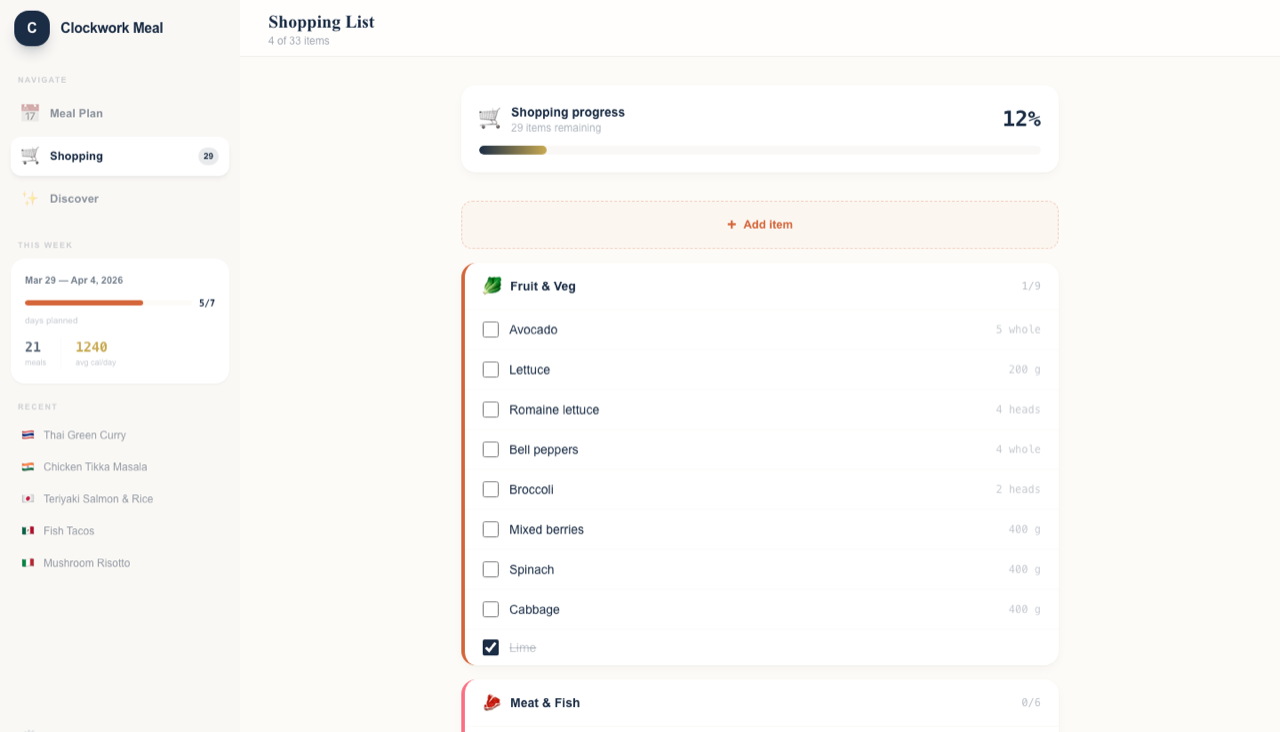
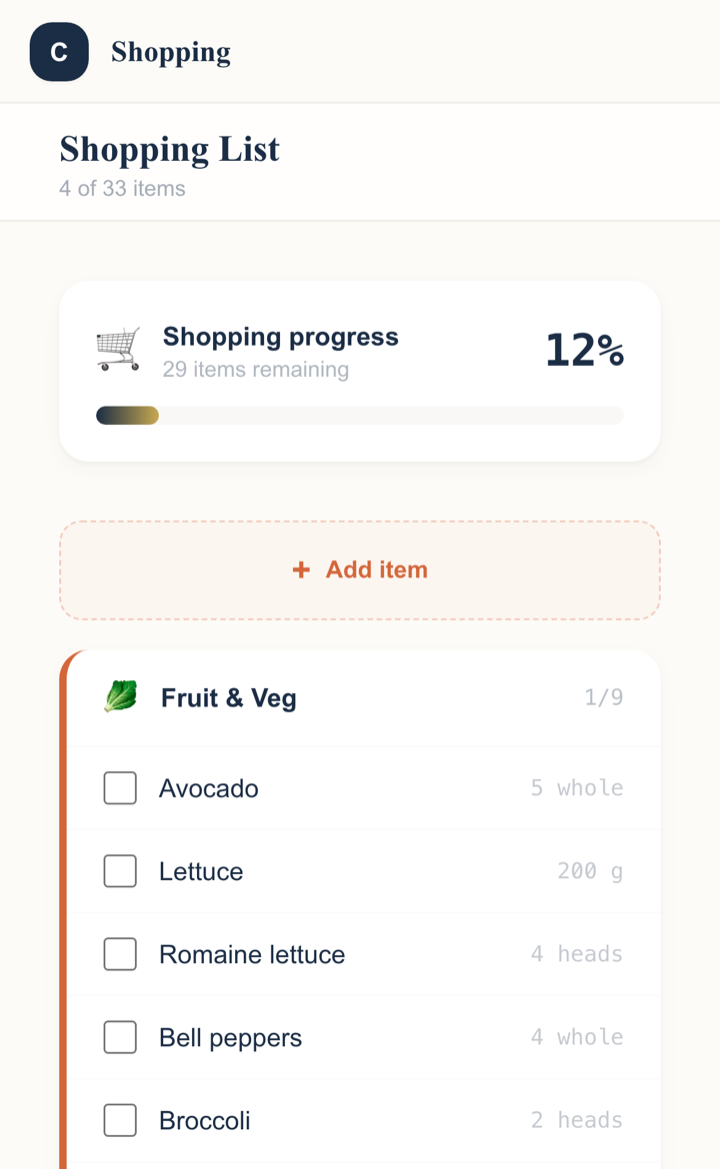
A disorganised list causes waste at both ends. You miss items and have to top up later, paying more, and you double buy things you could not see were already on the list. An unsorted list also drags out the shop, and a long shop invites impulse buys.
The fix is one consolidated list, quantities combined, sorted by the aisles of the shop. You buy each thing once, in the right amount, and you are in and out before the trolley fills with extras.
The simplest fix of all
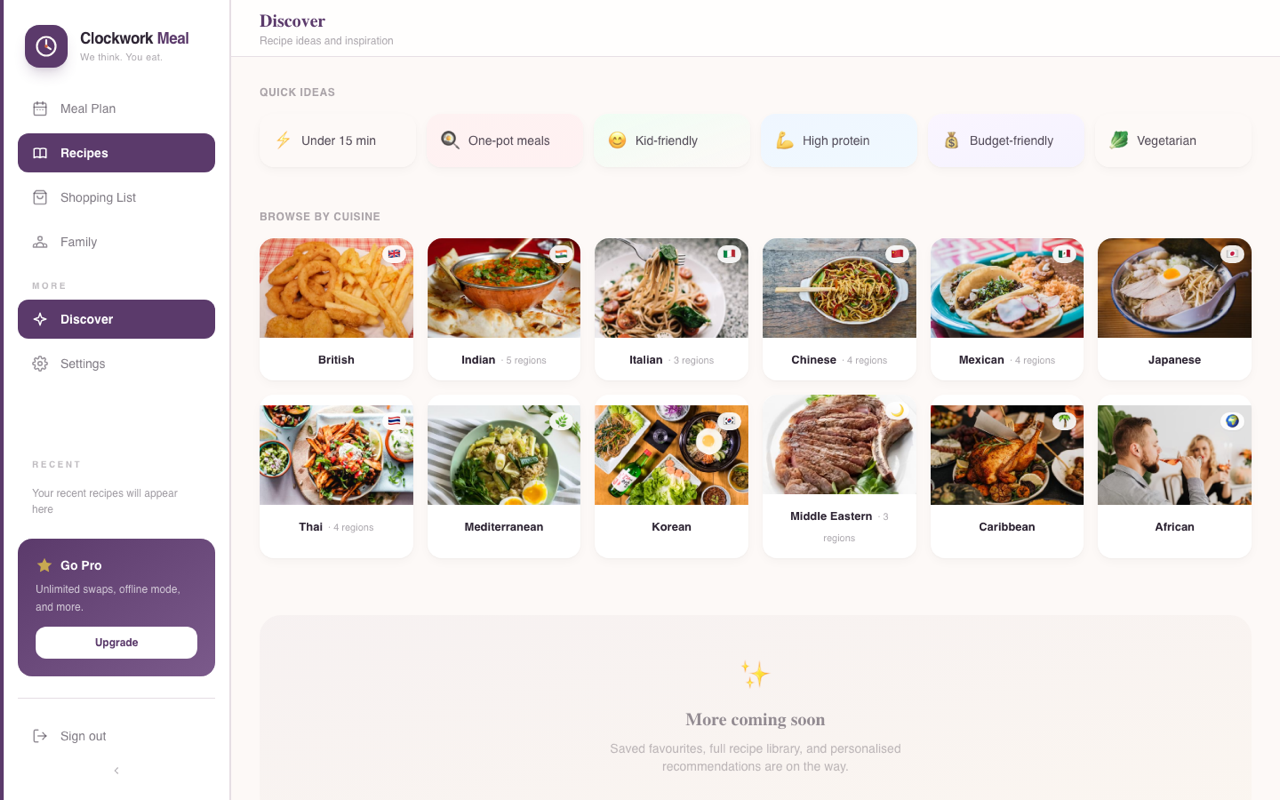
Every fix above comes down to the same move: plan first, then shop from a list that matches the plan exactly. That is precisely what Clockwork Meal does for you. It builds a week around your family, checks the quantities, and generates one consolidated shopping list grouped by category, with amounts combined across meals. Swap a meal and the list updates, so you never buy for a dinner you decided against.
Plan the week, shop the list, cook what you bought. The waste, and the spending that goes with it, falls away. Start planning free and keep the hundreds of dollars you have been throwing out.
Common questions
How much money does the average household waste on food?
Studies routinely put household food waste in the range of hundreds of dollars a month for a family, mostly from fresh produce and forgotten leftovers. The exact figure varies by country and household size, but for most families the wasted amount is large enough to notice once they start planning.
What is the single best way to stop wasting groceries?
Plan your meals first, then shop from a list built directly from that plan. Almost every form of grocery waste traces back to buying without a plan, so fixing that one habit removes most of the waste and most of the overspending at the same time.
Does meal planning really save money?
Yes. Planning matches what you buy to what you will cook, cuts impulse buys, uses up what you already own, and turns leftovers into planned meals. Each of those plugs a common leak, and together they typically save a family a meaningful amount every month.
Let Clockwork Meal plan your week
Every meal sorted for your whole family, including the school tiffin, with real cultural cooking and a shopping list that builds itself.
Try it free, no card needed