How to Plan a Whole Week of School Tiffin in One Sitting
A simple system for planning a full week of school lunches that stay fresh, travel well, and actually come home empty.

To plan a whole week of school tiffin in one sitting, set aside fifteen minutes once a week, choose foods that stay safe and tasty at room temperature, rotate three or four lunchbox formats you trust, and prep the components the night before. That is the whole system. Everything below is the detail that makes it hold up on a busy Tuesday morning.
Why one sitting beats deciding every morning
Packing a lunchbox at seven in the morning, five days a week, is the hardest possible version of the job. You are tired, the clock is against you, and every decision is made under pressure. That is how families end up with the same plain sandwich on repeat, or a last minute scramble that comes home half eaten.
Planning the whole week at once flips the problem. You make five decisions while calm, with the fridge in front of you, instead of one rushed decision every single morning. The mornings that follow become assembly, not invention. Assembly is fast. Invention is exhausting.
Choose foods that survive the lunchbox
A school tiffin sits in a bag for hours with no fridge, so the first filter is simple. Will this still be good at lunchtime, at room temperature, after a morning of being carried around? If the answer is no, it does not go in the box.
Foods that travel well include cooked grains and rice dishes, savoury pastries, rolled flatbreads with a dry filling, fritters, pasta that is happy cold, roasted vegetables, fruit that does not bruise, and anything you would happily eat at a picnic. Foods that struggle include loose dressings, anything that turns soggy, and dishes that only taste right piping hot.
Build around a few tiffin formats
You do not need a different concept every day. You need a small set of reliable formats and a rotation. A format is a shape, not a single recipe. Fill it with whatever suits the week and the child.
- A grain base with a protein and a vegetable on the side
- A rolled or folded flatbread with a dry, flavourful filling
- A handful of small savoury bites with fruit and a treat
- A cold noodle or pasta box with crunchy vegetables
Four formats, rotated across five days, already gives you a varied week with almost no thinking. Children also eat better when lunch is familiar, so repetition is a feature here, not a failure.
Prep the night before, not the morning of
The calm morning is built the evening before. When you plan, note the one or two things to do each night, such as cooking a pot of rice, roasting a tray of vegetables, or shaping fritters ready to pack. Ten quiet minutes after dinner removes the entire morning panic.
Pack as much as you safely can the night before and keep it cold overnight. In the morning you are closing a box, not building a meal.
Let the plan remember for you
The reason most lunchbox plans collapse is memory, not effort. You hold the whole week in your head, every preference and every allergy, and that load never lets up. This is exactly what Clockwork Meal takes off your plate. It treats the school tiffin as its own meal slot, plans it for every child for every weekday, keeps it room temperature safe, and tells you what to prep the night before.
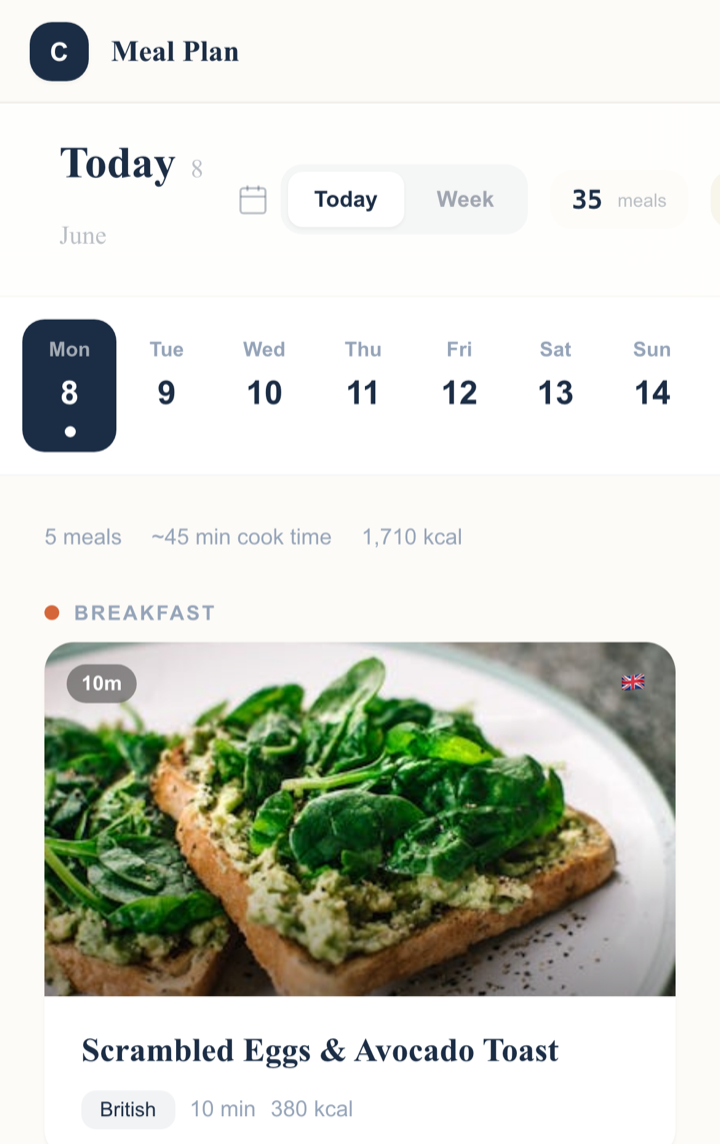
You set the rules once, including who needs a tiffin and what they will and will not eat, and the plan arrives already sorted. Plan your first week free and let the lunchbox handle itself.
Common questions
How long does it take to plan a week of tiffin?
About fifteen minutes once you have a few formats you trust. With an app that remembers your rules, it drops to a couple of minutes because the plan arrives already built and you only adjust the parts you want to change.
What foods are safe for a lunchbox with no ice pack?
Cooked grains and rice dishes, savoury pastries, rolled flatbreads with dry fillings, fritters, roasted vegetables and sturdy fruit all hold up well at room temperature for a school morning. Keep loose dressings and anything that goes soggy out of the box, or pack them separately.
How do I stop lunch coming home uneaten?
Pack food the child already recognises and likes, keep portions realistic, and rotate a small set of familiar formats rather than forcing variety for its own sake. Familiar and finished beats adventurous and wasted.
Let Clockwork Meal plan your week
Every meal sorted for your whole family, including the school tiffin, with real cultural cooking and a shopping list that builds itself.
Try it free, no card needed