The Invisible Mental Load of Feeding a Family
Planning, shopping and cooking every meal for a family is invisible labour that falls mostly on one person. Here is why it matters and what finally helped.

The mental load of feeding a family is the invisible work of planning, remembering and deciding every meal, and it almost always lands on one person. Cooking is the visible part. The far heavier part is the planning that never switches off, the running list of who eats what, and the quiet pressure of being the only one who holds it all. Naming that load is the first relief. Handing the remembering to a system, so it stops living inside one person's head, is the second. That second relief is the reason I built Clockwork Meal.
The work you cannot see
Ask who cooks dinner and many households can answer easily. Ask who decides what dinner will be, who noticed the bread ran out, who remembered that one child went off eggs and another cannot have nuts, who balanced the week so it was not pasta four nights running, and who already knows what tomorrow's lunch needs to be, and you are describing a different job entirely.
That job has no clock and no clear end. It runs in the background of every supermarket aisle and every quiet moment before sleep. It is real work, and because it produces no obvious artefact, it is rarely seen and almost never shared.
Why it falls on one person
The mental load concentrates because it rewards continuity. Once someone becomes the person who holds the food plan, it is genuinely easier for that person to keep holding it than to hand pieces over. Explaining everything you know, every preference and portion and allergy and habit, can feel like more effort than just doing it yourself.
So one person becomes the household database. They carry the preferences, the schedule, the standing exceptions, and the running grocery state. The arrangement looks efficient from the outside. From the inside it is a job that never clocks off.
What the mental load actually costs
The cost is not only time. It is attention and patience that quietly drain away from everything else. Decision fatigue is real, and few decisions repeat as relentlessly as what is for dinner. By the time the actual cooking starts, the hardest part is already done, and it was done in the cracks of the day where rest was supposed to be.
It also shows up as guilt. The plan slips, the same meals repeat, a lunch comes home untouched, and the person carrying the load feels it as a personal failure rather than what it is, which is one human being asked to run a logistics operation from memory, forever.
Naming it is the first relief
There is a specific kind of relief in giving this work a name. When a household understands that planning, tracking and deciding are real labour, not just an attitude or a chore that anyone could pick up on a whim, the conversation changes. The load becomes a thing that can be shared or offloaded, rather than a personality trait of the person who happens to hold it.
Naming it does not finish the job, but it ends the loneliness of it, and that matters more than it sounds.
What finally helped
For me, the turning point was realising the load was a memory problem before it was a time problem. The hours of cooking were fine. What wore me down was being the only place all the information lived. So I built the thing I wanted, which was a system that holds the household in its head instead of mine.
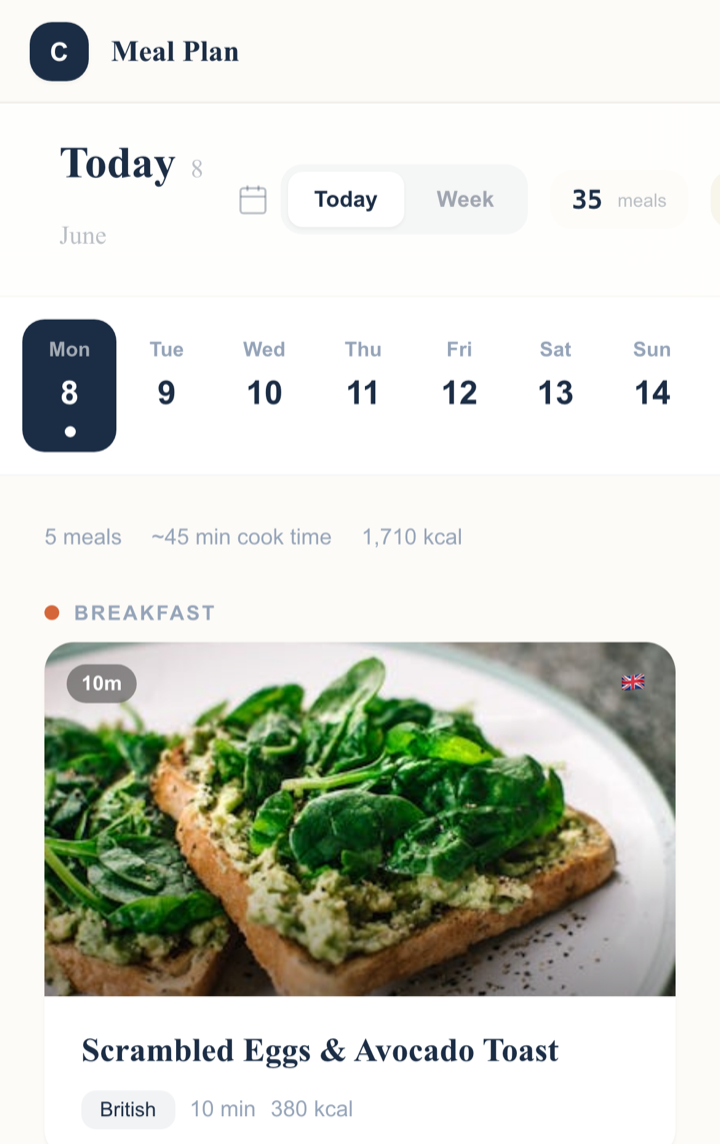
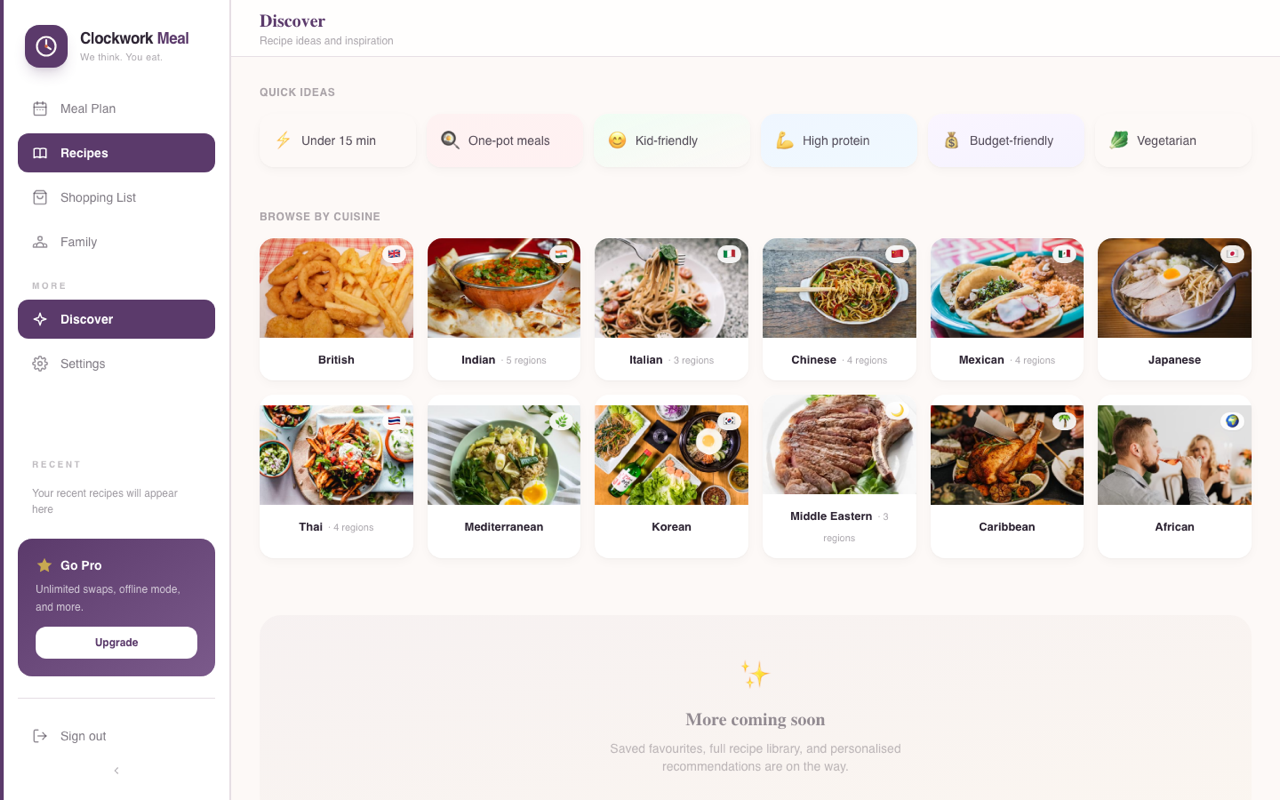
Clockwork Meal remembers who is in the family, what each person can and cannot eat, the cuisines you actually cook, how much time you have, and which children need a school tiffin. It plans the whole week from that, including the meals people forget to count, and it rebuilds the shopping list whenever anything changes. The remembering moves out of one person and into the plan.
The result is not that cooking disappears. It is that the invisible part, the part that followed you around all day, finally has somewhere else to live. Try it free and let the plan carry what you have been carrying alone.
Common questions
What is the mental load of feeding a family?
It is the invisible, ongoing work of planning meals, tracking everyone's needs and preferences, noticing what has run out, and deciding what to cook, all held in one person's memory. It sits separately from the visible work of cooking, and it is usually carried by a single household member.
Why does meal planning fall on one person?
Because the role rewards continuity. Once someone holds the preferences, schedule and grocery state, it feels easier to keep holding it than to hand pieces over. The household effectively turns one person into its food database, and that load rarely gets shared.
How can a family share the mental load of meals?
Start by naming it as real work, then move the information out of one person's head into a shared system. When the plan, the preferences and the shopping list live somewhere everyone can see, the household stops depending on one person's memory and the load can finally be shared.
Let Clockwork Meal plan your week
Every meal sorted for your whole family, including the school tiffin, with real cultural cooking and a shopping list that builds itself.
Try it free, no card needed